Barber Shop Social Media Marketing That Keeps The Chair Filled
A barber-shop guide to turning fades, lineups, chair availability, shop energy, product advice, and client routines into social posts that bring people back to the chair.
Barber content works when it shows skill close enough for a client to trust the chair. The detail shot matters. The booking cue matters. The shop energy matters.
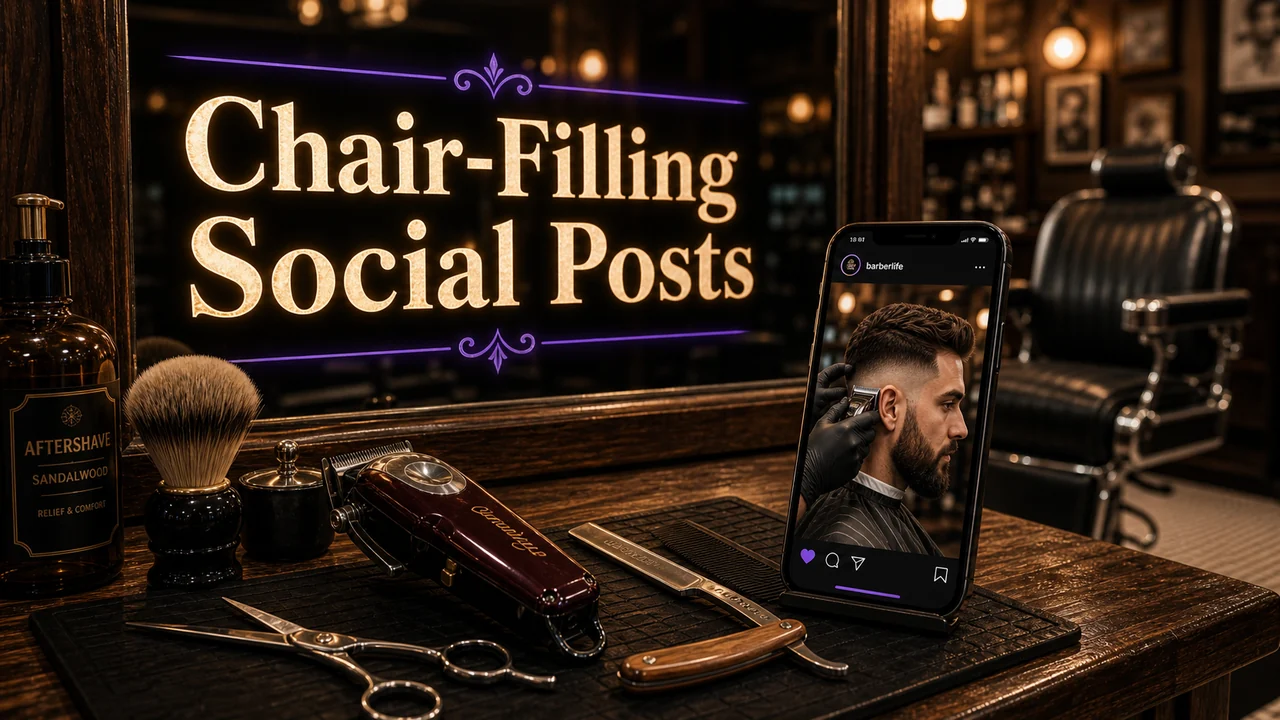
A client does not book a barber because the shop posted 'fresh cuts all week.' They book because they saw a clean taper at the temple, a beard line that fit the jaw, a kid's cut handled with patience, an open chair at the right time, or a shop atmosphere that felt like their kind of place.
Barber shop social media has to show proof fast. The feed should answer practical questions before the client asks: Can this barber handle my hair type? Do they know fades, tapers, scissor cuts, beard work, lineups, kids cuts, texture, and product styling? Is the chair available? How do I ask for what I want?
Barber content should connect visual proof with booking convenience. For a working shop, the play is to turn each chair into a repeatable content engine without slowing down service.
Fade detail closeup; beard lineup side angle; open chair story; how to ask for a taper; product matched to haircut; station reset; client maintenance timing; back-to-school booking reminder; hot towel ritual; before-mid-after carousel; texture styling tip; regular client routine.
Show The Cut Before The Caption
The haircut should carry the post. Start with the detail: blurry-to-clean fade transition, neckline, C-cup, beard cheek line, shear work, texture on top, taper behind the ear, or the final mirror reveal. If the visual proof is weak, no caption will save it.
Use barber language naturally: low fade, mid fade, high fade, burst fade, taper, skin fade, lineup, beard trim, hot towel, straight razor, clipper-over-comb, shear work, cowlick, neckline, guard, blend, bulk removal, texture powder, matte paste.
A practical caption: 'Low taper with bulk left on top for easier weekday styling. Ask for this if you want clean edges without going too tight on the sides.' That teaches the client how to book the look.
Make Booking Feel Easy And Urgent
Chair availability is content. Post open slots in a way that feels useful, not desperate. 'Two openings today: 2:30 for a cut, 4:15 for beard trim. Saturday is nearly full.' That tells regulars how to act.
Use stories for same-day openings and feed posts for recurring booking habits. A Sunday night post can remind clients to book before the weekend rush. A Thursday story can show remaining slots. A back-to-school post can push parents to book early.
Social posts should connect proof of skill with the next available booking window.
Use Detail Shots To Prove Skill
Before-and-after photos are useful, but detail shots prove craft. Show the blend under good light. Show the beard line from the side. Show the neckline after cleanup. Show the top texture after product. Show the station reset before the next client.
A strong carousel can include before, mid-cut, detail, finished front, finished side, and maintenance note. The final slide can say when to rebook: two weeks for a tight skin fade, three to four weeks for a taper, weekly or biweekly for beard line maintenance.
Do not over-filter the cut. Clients want to see the real work. Good lighting and clean framing beat heavy edits.
Teach Clients How To Ask Better
Many clients do not know how to describe the haircut they want. Help them. Create posts like 'What to ask for if you want a taper but not a skin fade,' 'How to explain bulk removal,' 'What a blurry fade means,' or 'Why bringing a reference photo helps.'
This kind of content reduces chair-time confusion. It also positions the barber as a guide, not just a pair of clippers.
Teaching clients how to communicate is both client experience and promotion. It reduces chair-time confusion and helps people book with more confidence.
Turn Shop Energy Into Content
The shop itself is part of the sale. Post the morning station setup, the cape snap, the clipper lineup, the hot towel cabinet, the playlist vibe, the regular greeting, the wall of products, or the chair reset. These details make the shop feel real.
Do not fake energy. If your shop is classic and quiet, lean into precision, ritual, and calm. If it is loud and social, show banter and pace. If it is family-friendly, show patience and clean routines for kids cuts.
Shop personality content helps new clients decide whether they will feel comfortable walking in.
Use Product Advice Between Appointments
Product posts are useful when tied to hair type and haircut. Do not post a bottle with 'available now.' Explain who it is for: matte paste for textured crops, pomade for shine and control, sea salt spray for loose movement, beard oil for dryness, texture powder for volume.
Show how much product to use. Show application on damp versus dry hair. Explain why too much product makes fine hair collapse. Explain why beard oil goes to the skin, not only the hair.
These posts support retail sales, but they also help clients keep the cut looking good until the next appointment.
A Barber Content Rhythm Around The Chair
A shop can build a simple rhythm: Monday maintenance tip, Tuesday transformation, Wednesday product or styling advice, Thursday open chair reminder, Friday weekend cuts, Saturday shop energy, Sunday rebooking prompt.
Capture content without slowing down the day. Ask for consent before filming. Take one before shot, one side detail, one finished shot, and one short clip of styling. Keep a note of the guard, cut type, product, and maintenance timing so the caption is specific.
Barber content should make the viewer think, 'That barber gets the details, and I can book without hassle.' That is how social posts help keep the chair filled.
A Chair-Side Playbook For Barber Posts
Photograph the blend where clients inspect it: temple, neckline, behind the ear, beard cheek line, and transition from bulk to skin. A front-facing selfie is not enough proof for a barber feed.
Use appointment language. Open chair, walk-in window, rebook, weekend slots, back-to-school cuts, beard cleanup, hot towel shave, and maintenance timing all help clients act. Skill proof plus availability is stronger than either one alone.
Teach haircut vocabulary. Low taper, mid fade, skin fade, burst fade, scissor cut, textured crop, lineup, C-cup, beard fade, neckline, and guard numbers are terms clients may use incorrectly. Help them ask better.
Post maintenance timelines. A skin fade may need two weeks. A taper may stretch longer. Beard lineups may need weekly cleanup. Product and hair type change the recommendation. This kind of advice gets clients back in the chair.
Use product content with hair outcomes. Matte paste for texture, pomade for shine, sea salt spray for movement, beard oil for dryness, texture powder for volume. Show amount, application, and finish.
Show station hygiene and reset. Clippers, guards, disinfectant, fresh cape, clean chair, towel warmer, and organized tools are trust signals. They also make the shop feel professional.
Turn regulars into loyalty content with consent. Show a client routine: same taper every three weeks, beard cleanup before travel, back-to-school cut, or wedding-week grooming plan. Routine is social proof.
Capture the mirror reveal, but do not rely on it. Pair it with side detail, neckline, top texture, and the product used. The reveal is emotion. The detail is proof.
Use shop personality honestly. Classic, luxury, neighborhood, family-friendly, appointment-only, walk-in heavy, or beard-focused shops should not post with the same voice. Let the real chair culture show.
Make booking posts specific. 'Two spots left Friday' beats 'book now.' 'Cut and beard slot open at 3:15' beats 'availability this week.' Specificity fills chairs.
Caption Starters From The Barber Chair
-
Caption idea: Low taper with texture left on top. Good option if you want a cleaner edge without taking the sides down to a skin fade. Add one visual that proves the point, then end with the next step a customer should take. Keep the post narrow: one decision, one piece of proof, one action. If the caption starts drifting into general advice, cut it back to the specific moment the customer is facing.
-
Caption idea: Two open chairs today: 2:30 for a cut and 4:15 for a beard cleanup. Weekend slots are almost gone. Add one visual that proves the point, then end with the next step a customer should take. Keep the post narrow: one decision, one piece of proof, one action. If the caption starts drifting into general advice, cut it back to the specific moment the customer is facing.
-
Caption idea: If you ask for a fade, bring a reference for height. Low, mid, high, burst, and skin fades can look very different. Add one visual that proves the point, then end with the next step a customer should take. Keep the post narrow: one decision, one piece of proof, one action. If the caption starts drifting into general advice, cut it back to the specific moment the customer is facing.
-
Caption idea: Beard lineup tip: the cheek line should fit the face, not just chase the highest possible edge. Add one visual that proves the point, then end with the next step a customer should take. Keep the post narrow: one decision, one piece of proof, one action. If the caption starts drifting into general advice, cut it back to the specific moment the customer is facing.
-
Caption idea: This cut uses matte paste for texture instead of shine. Better for a natural finish that still has control. Add one visual that proves the point, then end with the next step a customer should take. Keep the post narrow: one decision, one piece of proof, one action. If the caption starts drifting into general advice, cut it back to the specific moment the customer is facing.
-
Caption idea: A fresh skin fade looks sharp, but it needs maintenance. If you want it crisp every week, rebook before you leave. Add one visual that proves the point, then end with the next step a customer should take. Keep the post narrow: one decision, one piece of proof, one action. If the caption starts drifting into general advice, cut it back to the specific moment the customer is facing.
-
Caption idea: Clipper-over-comb helps remove bulk without making the cut look disconnected. It is a detail clients feel even when they do not know the term. Add one visual that proves the point, then end with the next step a customer should take. Keep the post narrow: one decision, one piece of proof, one action. If the caption starts drifting into general advice, cut it back to the specific moment the customer is facing.
-
Caption idea: Back-to-school cuts book fast. If your kid needs a cleanup before photos, do not wait until the final weekend. Add one visual that proves the point, then end with the next step a customer should take. Keep the post narrow: one decision, one piece of proof, one action. If the caption starts drifting into general advice, cut it back to the specific moment the customer is facing.
-
Caption idea: Hot towel shave day: slower pace, cleaner lines, and a little reset before the week starts. Add one visual that proves the point, then end with the next step a customer should take. Keep the post narrow: one decision, one piece of proof, one action. If the caption starts drifting into general advice, cut it back to the specific moment the customer is facing.
-
Caption idea: Texture on top changes how the cut grows out. Ask your barber how to style it between visits. Add one visual that proves the point, then end with the next step a customer should take. Keep the post narrow: one decision, one piece of proof, one action. If the caption starts drifting into general advice, cut it back to the specific moment the customer is facing.
-
Caption idea: Station reset matters. Clean tools, fresh cape, organized guards, and a ready chair are part of the service. Add one visual that proves the point, then end with the next step a customer should take. Keep the post narrow: one decision, one piece of proof, one action. If the caption starts drifting into general advice, cut it back to the specific moment the customer is facing.
-
Caption idea: Regular client routine: taper every three weeks, beard cleanup every other visit, matte product at home. Add one visual that proves the point, then end with the next step a customer should take. Keep the post narrow: one decision, one piece of proof, one action. If the caption starts drifting into general advice, cut it back to the specific moment the customer is facing.
Barber Content Mistakes To Retire
Posting only front-facing finished shots misses the proof clients want. Show side detail, neckline, beard line, and blend quality. A better replacement is to show the real workflow behind the service, name the customer question it answers, and make the next step obvious. That keeps the post useful instead of merely decorative.
Using 'fresh cut' for every caption gets stale. Name the cut, maintenance timing, product, and who it fits. A better replacement is to show the real workflow behind the service, name the customer question it answers, and make the next step obvious. That keeps the post useful instead of merely decorative.
Forgetting availability wastes momentum. If the cut looks good, tell viewers when the chair is open. A better replacement is to show the real workflow behind the service, name the customer question it answers, and make the next step obvious. That keeps the post useful instead of merely decorative.
Over-filtering the haircut makes the work harder to trust. Clean light and sharp detail beat heavy edits. A better replacement is to show the real workflow behind the service, name the customer question it answers, and make the next step obvious. That keeps the post useful instead of merely decorative.
Ignoring client education leads to vague bookings. Teach people how to ask for tapers, fades, texture, and beard shapes. A better replacement is to show the real workflow behind the service, name the customer question it answers, and make the next step obvious. That keeps the post useful instead of merely decorative.
Making the shop look like every other shop hides personality. Show the real pace, tone, ritual, and culture of the chair. A better replacement is to show the real workflow behind the service, name the customer question it answers, and make the next step obvious. That keeps the post useful instead of merely decorative.
What To Capture Between Clients
-
Before shot with client consent. Pair it with a short caption that explains why this detail matters to the customer. Capture it during normal work instead of staging a separate shoot, then save it for the exact week when that question, deadline, appointment, order, or booking decision is most likely to appear.
-
Side blend detail under good light. Pair it with a short caption that explains why this detail matters to the customer. Capture it during normal work instead of staging a separate shoot, then save it for the exact week when that question, deadline, appointment, order, or booking decision is most likely to appear.
-
Neckline cleanup and final mirror reveal. Pair it with a short caption that explains why this detail matters to the customer. Capture it during normal work instead of staging a separate shoot, then save it for the exact week when that question, deadline, appointment, order, or booking decision is most likely to appear.
-
Beard lineup closeup from the side. Pair it with a short caption that explains why this detail matters to the customer. Capture it during normal work instead of staging a separate shoot, then save it for the exact week when that question, deadline, appointment, order, or booking decision is most likely to appear.
-
Tool station reset between appointments. Pair it with a short caption that explains why this detail matters to the customer. Capture it during normal work instead of staging a separate shoot, then save it for the exact week when that question, deadline, appointment, order, or booking decision is most likely to appear.
-
Product amount and application on finished style. Pair it with a short caption that explains why this detail matters to the customer. Capture it during normal work instead of staging a separate shoot, then save it for the exact week when that question, deadline, appointment, order, or booking decision is most likely to appear.
-
Open chair story with specific time slots. Pair it with a short caption that explains why this detail matters to the customer. Capture it during normal work instead of staging a separate shoot, then save it for the exact week when that question, deadline, appointment, order, or booking decision is most likely to appear.
-
Regular client maintenance routine. Pair it with a short caption that explains why this detail matters to the customer. Capture it during normal work instead of staging a separate shoot, then save it for the exact week when that question, deadline, appointment, order, or booking decision is most likely to appear.
Quick Content Prompts You Can Use This Week
- Which cut detail proves the blend? Turn this into one post with one visual, one practical explanation, and one clear next step.
- What open chair reminder can help regulars book before the rush? Turn this into one post with one visual, one practical explanation, and one clear next step.
- Which style term do clients misuse? Turn this into one post with one visual, one practical explanation, and one clear next step.
- What product tip would help a client maintain the cut? Turn this into one post with one visual, one practical explanation, and one clear next step.
The best profession-specific content does not start with a trend. It starts with a real customer decision and shows the proof that helps that decision feel easier.
Barber shop social media is strongest when it stays close to the chair. Show the cut, the detail, the timing, the product, and the shop energy.
The best posts do not just say you cut hair. They show the client why your chair is the one they should trust next.
Ready to Keep Your Chair Always Filled?
You have identified the problem. You have seen what it is costing you. The only question now is when you decide to fix it. Check the link below to learn how Brandstorm.app can create marketing that books appointments.
DESIGN YOUR NEW MARKETING STRATEGY TODAY!